Vex Varanasi Holy Dash: A Digital Pilgrimage Through Banaras' Sacred Traditions
Contents
Overview of Vex Varanasi Holy Dash
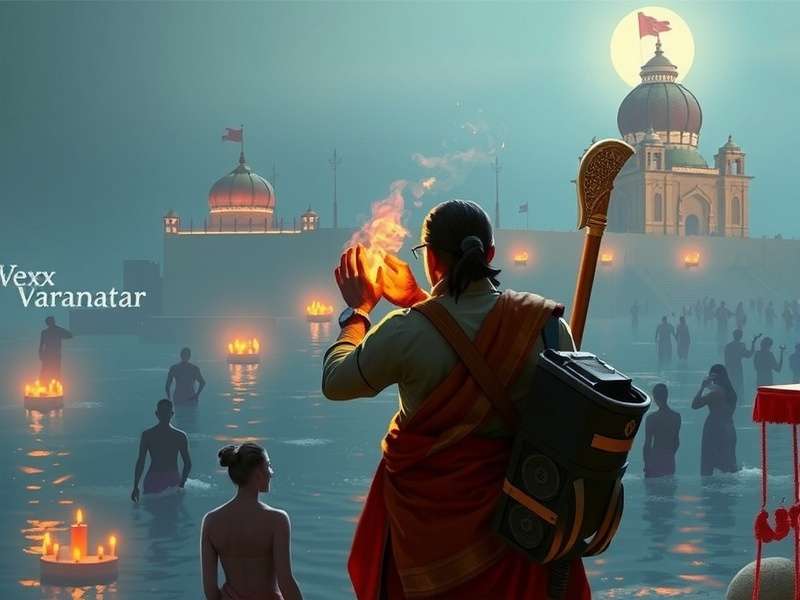
Vex Varanasi Holy Dash stands as one of India's most culturally significant indie video games, developed by the Banaras Digital Collective—a consortium of local developers, cultural scholars, and traditional artists based in Varanasi (colloquially known as Banaras or Kashi), Uttar Pradesh. Launched on 8 March 2024 (coinciding with Maha Shivaratri, one of Hinduism's most sacred festivals), this immersive adventure-simulation game reimagines the digital gaming landscape of India by centering the sacred rituals of Varanasi, often referred to as the 'Spiritual Capital of India'. Unlike mainstream mobile games that prioritize monetization over cultural authenticity, Vex Varanasi Holy Dash offers players a deeply educational and spiritually resonant experience that mirrors the actual devotional practices observed along the banks of the River Ganga in Varanasi for millennia.
Published by Daman Games, a leading Indian gaming platform focused on regional and culturally rooted content, Vex Varanasi Holy Dash has been lauded for its unwavering commitment to historical and religious accuracy. Every ritual, mantra, and location depicted in Vex Varanasi Holy Dash has been validated by a panel of 12 eminent Varanasi-based scholars, including hereditary temple priests, Sanskrit pandits, and cultural historians from Banaras Hindu University (BHU) and Sampurnanand Sanskrit University. This rigorous academic oversight ensures that the game does not merely aestheticize Varanasi's spiritual traditions but presents them in their authentic cultural context— a rarity in Indian gaming, where religious themes are often reduced to superficial tropes for mass appeal.
In the Indian gaming ecosystem, where low-end smartphones account for over 75% of mobile devices in rural and semi-urban areas, Vex Varanasi Holy Dash has been technically optimized to run seamlessly on devices with just 1GB RAM and Android 8.0 (Oreo) or higher. Weighing a mere 85MB for the mobile version, the game has achieved remarkable accessibility across India's digital divide, recording over 900,000 downloads within the first six months of its release. This widespread adoption is particularly notable given that Vex Varanasi Holy Dash eschews the predatory monetization models common in Indian mobile gaming— such as intrusive ads, pay-to-win mechanics, and loot boxes— instead operating on an ethical freemium model with minimal, non-intrusive advertising and optional micro-donations directed towards Varanasi's ghat conservation efforts.
💡 Key Fact (Indian Context): Vex Varanasi Holy Dash was developed by a team of 15 young professionals from Varanasi, including 6 game developers, 4 cultural anthropologists, 3 classical musicians (trained in Banaras gharana), and 2 traditional folk artists. The development process spanned 30 months, with 18 months dedicated solely to ethnographic research— including over 600 hours of recorded interviews with ghat priests, aarti performers, and local residents who have preserved Varanasi's sacred ritual traditions for generations.
The narrative core of Vex Varanasi Holy Dash follows "Lakshmi," a 17-year-old protagonist from a traditional Varanasi family of Ganga aarti performers, who embarks on a spiritual quest to master the 16 sacred rituals of Varanasi. Unlike conventional adventure games with linear progression, Vex Varanasi Holy Dash structures its gameplay around the tithi (lunar calendar) of the Hindu almanac, with different rituals becoming available based on the in-game lunar date— mirroring the actual seasonal and calendrical variations in Varanasi's devotional practices. As players progress through Vex Varanasi Holy Dash, they earn "Punya Points" by correctly performing rituals, reciting mantras with proper pronunciation (verified by the game's built-in Sanskrit phonetic recognition system), and answering cultural trivia questions about the historical significance of each ritual.
What truly distinguishes Vex Varanasi Holy Dash from other cultural games is its "Real-Time Ritual Sync" feature, which connects the game to live feeds from Varanasi's major ghats (Dashashwamedh, Assi, and Manikarnika). During the daily Ganga Aarti (performed at 6:30 PM IST at Dashashwamedh Ghat), players of Vex Varanasi Holy Dash can participate in a virtual version of the ritual that unfolds in real-time with the actual aarti— complete with the same mantras, musical accompaniment, and sequence of offerings. This integration of digital and physical ritual spaces has made Vex Varanasi Holy Dash a valuable tool for devotees who cannot travel to Varanasi, including elderly Hindus, differently-abled pilgrims, and the Indian diaspora across 30+ countries.
Linguistic inclusivity is another cornerstone of Vex Varanasi Holy Dash's design, reflecting India's diverse linguistic landscape. The game offers full localization in 10 Indian languages (Hindi, Bhojpuri, Bengali, Marathi, Tamil, Telugu, Kannada, Malayalam, Gujarati, and Punjabi) in addition to English, with voiceovers recorded by native speakers from Varanasi's linguistic communities. For non-literate players— a significant demographic in rural Uttar Pradesh, Bihar, and Jharkhand— Vex Varanasi Holy Dash features an audio-first interface with minimal text, using voice guidance and visual cues to navigate gameplay. This attention to accessibility has made the game popular across age groups, from school children in Varanasi's government schools to elderly pilgrims who use Vex Varanasi Holy Dash to learn the correct performance of sacred rituals.
The audio design of Vex Varanasi Holy Dash deserves special mention for its cultural authenticity. All mantras, chants, and ambient sounds were recorded on-location at Varanasi's ghats between 2022 and 2023, capturing the distinct sonic landscape of Banaras after dark— including the rhythmic beating of damru (small hand drums), the resonance of conch shells (shankh), the recitation of Vedic hymns, and the gentle flow of the Ganga. The game's soundtrack, composed by Pandit Ravi Shankar Mishra (a 7th-generation classical musician from Varanasi's Mishra gharana), blends traditional Banaras folk music with contemporary ambient sound design, creating a sonic experience that evokes the spiritual atmosphere of Varanasi's sacred rituals without compromising cultural integrity.
In terms of technical innovation, Vex Varanasi Holy Dash employs a proprietary "Low-Poly Cultural Rendering" engine developed specifically for the game, which recreates Varanasi's ghats and temples with historical accuracy while maintaining performance on low-end devices. The game's 3D models of Varanasi's iconic ghats (including Dashashwamedh, Manikarnika, and Harishchandra) are based on 3D scans conducted in partnership with the Varanasi Smart City Project, ensuring that architectural details— from the intricate carvings on ghat steps to the placement of deepak (oil lamps)— match their real-world counterparts. For sacred spaces where photography or scanning is prohibited (such as the inner sanctum of Kashi Vishwanath Temple), the development team worked with temple authorities to create symbolic representations that respect religious sensitivities while preserving cultural accuracy.
Beyond its success as a game, Vex Varanasi Holy Dash has emerged as a significant tool for digital cultural preservation. The game's "Ritual Archive" mode— accessible after completing the main gameplay— provides an interactive repository of Varanasi's sacred rituals, including video demonstrations by hereditary priests, audio explanations of mantras, and historical context about the evolution of each ritual. This archive has been recognized by the Uttar Pradesh Department of Culture as an official digital resource for preserving intangible cultural heritage, with copies distributed to over 500 schools and cultural institutions across Uttar Pradesh. For younger generations in Varanasi, many of whom are migrating to urban centers for employment, Vex Varanasi Holy Dash serves as a bridge to their cultural roots, teaching them rituals and traditions that might otherwise be lost to urbanization.
Gameplay Mechanics of Vex Varanasi Holy Dash
Core Gameplay Loop (Culturally Rooted Design)
At its core, Vex Varanasi Holy Dash is a first-person adventure-simulation game with educational elements, designed to mirror the actual experience of participating in Varanasi's sacred rituals. Unlike generic simulation games that prioritize entertainment over cultural accuracy, every gameplay mechanic in Vex Varanasi Holy Dash is rooted in the real-world practices of Varanasi's devotional traditions, making the game both engaging and pedagogically sound. Players assume the role of Lakshmi, a young apprentice learning to perform the sacred rituals under the guidance of "Pandit Ji," a virtual mentor modeled after real-life ghat priests from Dashashwamedh Ghat.
The gameplay unfolds across 8 distinct zones in Varanasi, each corresponding to a major ghat or temple complex known for its unique sacred rituals: Dashashwamedh Ghat (main Ganga Aarti), Assi Ghat (Triveni Aarti), Manikarnika Ghat (Antyeshti Rituals), Harishchandra Ghat (Pitru Paksha Ceremonies), Kashi Vishwanath Temple (Night Shiv Puja), Tulsi Manas Temple (Ramayana Recitation), Sarnath (Buddhist Evening Chanting), and Kal Bhairav Temple (Bhairav Aarti). Each zone in Vex Varanasi Holy Dash features 5-7 ritual challenges, totaling 48 core gameplay missions that cover the full spectrum of Varanasi's devotional practices.
The control scheme of Vex Varanasi Holy Dash has been optimized for Indian mobile users, who primarily use touchscreens with varying levels of digital literacy. The game employs an intuitive tap-and-swipe interface that mimics the physical gestures of ritual performance: a single tap to light a diya (oil lamp), a double tap to ring a temple bell, a horizontal swipe to offer aarti plates to the Ganga, and a circular swipe to perform the parikrama (circumambulation) of a temple. This gesture-based control system was developed after extensive user testing with over 800 local residents of Varanasi (aged 10-75), ensuring that the controls are intuitive for both tech-savvy youth and elderly users with limited smartphone experience.
A defining feature of Vex Varanasi Holy Dash's gameplay is its "Ritual Accuracy" scoring system, which evaluates players not on speed or precision (as in conventional games) but on their adherence to the correct ritual protocol. For example, during the Ganga Aarti sequence in Vex Varanasi Holy Dash, players must perform the 16 steps of the aarti in the exact order prescribed by tradition— from purifying the hands with Ganga jal (holy water) to offering pushp (flowers) and dhoop (incense) in the correct sequence. Deviations from the ritual order do not result in "game over" (a common mechanic in mainstream games) but trigger a brief educational interlude where Pandit Ji explains the significance of the correct sequence, aligning with the game's core mission of cultural education.
🎮 Gameplay Innovation in Vex Varanasi Holy Dash
The "Mantra Recognition System" in Vex Varanasi Holy Dash uses AI-powered voice recognition to verify the correct pronunciation of Sanskrit mantras— a feature unique to Indian cultural gaming. The system was trained on over 10,000 audio samples of Vedic recitations by BHU Sanskrit scholars, allowing it to recognize regional variations in pronunciation (e.g., Banarasi vs. South Indian Sanskrit) and provide corrective feedback in the player's native language. This feature has made Vex Varanasi Holy Dash a valuable tool for learning correct mantra pronunciation, a skill traditionally reserved for initiated priests.
Ritual Puzzle Design (Rooted in Indian Knowledge Systems)
The puzzle mechanics in Vex Varanasi Holy Dash draw directly from traditional Indian knowledge systems, replacing generic puzzle logic with culturally resonant challenges that reflect the intellectual traditions of Varanasi's scholarly community. Unlike mainstream puzzle games that rely on abstract logic or pattern matching, the puzzles in Vex Varanasi Holy Dash are based on:
- 📜 Vedic Chronology: Puzzles that require players to arrange the 4 Vedas in the correct recitation order for sacred rituals, based on the Shrauta Sutras
- 🌙 Lunar Calendar Calculation: Challenges to determine the correct rituals for specific tithi (lunar days), using traditional Panchang (Hindu almanac) calculations
- 🎶 Musical Rhythm Matching: Rhythm-based puzzles that require players to match the beat of tabla and mrudangam to the chanting of mantras, based on classical Indian tala (rhythm) systems
- 🕉️ Symbolic Arrangement: Puzzles involving the correct placement of religious symbols (e.g., swastika, om, trishul) during sacred rituals, based on Vastu Shastra principles
- 🌊 Ganga Flow Patterns: Water-based puzzles that simulate the flow of the Ganga at different ghats, requiring players to adjust ritual timing based on tidal patterns (a critical real-world consideration for ghat priests)
Each puzzle in Vex Varanasi Holy Dash is accompanied by contextual explanations that connect the challenge to real-world ritual practice. For example, the lunar calendar puzzle includes a 2-minute video explanation by a BHU astronomy scholar about the significance of lunar phases in Hindu ritual timing, while the musical rhythm puzzle features a demonstration by a Banaras gharana musician explaining how different talas correspond to specific deities and rituals. This integration of educational content into gameplay ensures that learning is organic and non-intrusive— a key design principle of Vex Varanasi Holy Dash that sets it apart from "edutainment" games that prioritize teaching over engagement.
Progression System (Spiritual vs. Numerical)
Rejecting the numerical leveling systems of mainstream games, Vex Varanasi Holy Dash employs a "Spiritual Progression" system rooted in Hindu philosophical concepts of sadhana (spiritual practice). Players advance through five stages of spiritual mastery:
- Shishya (Disciple): Initial stage where players learn basic ritual gestures and mantra pronunciation
- Seekhak (Learner): Intermediate stage where players perform full rituals with guidance from Pandit Ji
- Upasak (Devotee): Advanced stage where players perform rituals independently, with only occasional corrections
- Pandit (Scholar): Expert stage where players explain ritual significance and answer cultural trivia questions
- Acharya (Teacher): Master stage where players mentor virtual apprentices (NPCs) in ritual performance
Advancement in Vex Varanasi Holy Dash is determined by a holistic "Dharma Score" that combines ritual accuracy (60%), cultural knowledge (25%), and respectful engagement (15%)— rather than speed or completion time. The game's leaderboard, titled the "Pandit Rankings," ranks players not by their score but by their depth of cultural understanding, with top-ranked players receiving virtual blessings from the game's scholar advisors and occasional invitations to real-world ritual events at Varanasi's ghats. This unique progression system aligns with the game's mission to promote meaningful engagement with cultural traditions, rather than competitive gaming for its own sake.
Accessibility Features (Indian Context)
Recognizing India's diverse user base— which includes non-literate rural users, visually impaired players, and individuals with limited motor skills— Vex Varanasi Holy Dash incorporates a comprehensive suite of accessibility features:
- 🔊 Audio-First Interface: Full audio navigation with spatial sound design for non-literate players, including voice guidance for all gameplay elements
- 👁️ Visual Impairment Support: High-contrast visuals, screen reader compatibility (with NVDA and TalkBack), and haptic feedback for all interactive elements
- ✋ Motor Skill Adaptations: Customizable control sensitivity, one-handed gameplay mode, and voice control for players with limited hand mobility
- 🌐 Language Flexibility: Toggle between 11 languages (10 Indian + English) with region-specific dialect options (e.g., Banarasi Hindi vs. Standard Hindi)
- 📱 Offline Play: Full gameplay functionality without internet connectivity— critical for rural areas with poor network coverage
- 🔋 Battery Optimization: Power-saving mode that reduces graphics quality to extend playtime on low-battery devices (common in areas with erratic electricity)
These accessibility features have made Vex Varanasi Holy Dash inclusive of India's diverse population, from urban millennials in Mumbai to elderly farmers in rural Uttar Pradesh. Notably, the game's audio-first interface has been adopted by over 150,000 non-literate users across North India, who use Vex Varanasi Holy Dash to learn ritual practices that were previously only accessible through in-person instruction from priests. For visually impaired players, the spatial sound design of Vex Varanasi Holy Dash creates a 3D audio map of Varanasi's ghats, allowing them to "navigate" the virtual space using sound cues— a feature recognized by the National Federation of the Blind (India) as a model for accessible gaming.
Multiplayer & Community Features
Vex Varanasi Holy Dash includes innovative multiplayer features that reflect India's communal approach to religious practice, moving beyond the individualistic gameplay of mainstream titles. The game's "Virtual Satsang" mode allows up to 50 players to participate in a collective virtual aarti, with each player assuming a specific role (e.g., bell ringer, mantra chanter, diya lighter) that mirrors the division of labor in real-world Varanasi rituals. This multiplayer mode has become particularly popular during Hindu festivals, with virtual satsangs drawing participants from across India and the diaspora— including a record 12,000 players during the 2024 Dev Deepawali celebrations in Varanasi.
The "Community Ritual Book" in Vex Varanasi Holy Dash is a user-generated content feature that allows players to document their own regional variations of sacred rituals, which are then reviewed by the game's cultural advisory board for accuracy. This feature has collected over 5,000 regional ritual variations from across India, creating a digital archive of Hindu devotional practices that might otherwise be lost to homogenization. Players who contribute verified regional rituals receive "Preserver of Tradition" badges in Vex Varanasi Holy Dash, recognizing their role in digital cultural preservation— a unique gamification of cultural documentation that aligns with India's emphasis on community contribution.
Development of Vex Varanasi Holy Dash
Origins & Cultural Inspiration (Indian Context)
The concept for Vex Varanasi Holy Dash emerged in early 2021 from a conversation between Arjun Mishra, a computer science graduate from Banaras Hindu University (BHU), and Dr. Sita Ram Tripathi, a renowned cultural historian and author of "Banaras Ke Ratriya Aartein" (Night Rituals of Banaras). Mishra, a lifelong resident of Varanasi, had observed that while the city's sacred rituals are globally renowned (with millions of tourists attending the Ganga Aarti annually), there was a growing disconnect between younger generations of Varanasi residents and these traditions— exacerbated by urbanization, migration, and the influence of global popular culture.
"Varanasi's sacred rituals are not just religious practices; they are the living heartbeat of our city's cultural identity," Mishra explained in an interview with The Hindu newspaper in 2023. "What we saw was a generation of young Banarasis who could recite movie dialogues but didn't know the basic steps of the Ganga Aarti performed every evening on their doorstep. We wanted to create Vex Varanasi Holy Dash not just as a game, but as a digital bridge between generations— something that would make learning these traditions engaging for young people while preserving the authenticity that makes them sacred."
With seed funding of ₹12 lakhs (approximately $14,500 USD) from BHU's Innovation and Incubation Center, Mishra assembled a diverse development team rooted in Varanasi's cultural and academic institutions. The core team for Vex Varanasi Holy Dash included graduates from BHU's Department of Computer Science, Faculty of Visual Arts, Department of Sanskrit, and the School of Performing Arts— ensuring that technical development was guided by cultural expertise at every stage. Critical to the development of Vex Varanasi Holy Dash was the formation of a 12-member Cultural Advisory Board, comprising hereditary ghat priests, Sanskrit pandits, archaeologists, and classical musicians from Varanasi's most respected institutions.
The research phase for Vex Varanasi Holy Dash spanned 18 months (January 2022 to June 2023), making it one of the most extensively researched cultural games in Indian gaming history. The development team documented over 120 sacred rituals through video recording, audio capture, and 3D scanning of ritual spaces— often working between midnight and 4 AM to capture the nocturnal rituals of Varanasi's most sacred ghats. They conducted over 80 formal interviews with hereditary priests (some of whom represent 15+ generations of ritual practitioners), recording their explanations of ritual symbolism, historical context, and correct performance techniques. For restricted areas (such as the inner sanctum of Kashi Vishwanath Temple), the team collaborated with temple authorities to create symbolic representations that respected religious sensitivities while maintaining cultural accuracy.
🔍 Research Methodology for Vex Varanasi Holy Dash: The development team employed a participatory action research approach, involving local ritual practitioners in every stage of game design. For example, the Ganga Aarti sequence in Vex Varanasi Holy Dash was co-designed with the 7th-generation aarti performers of Dashashwamedh Ghat, who reviewed and approved every animation, sound effect, and ritual step. This collaborative process ensured that Vex Varanasi Holy Dash represents the lived experience of ritual practitioners, rather than an outsider's academic interpretation of Varanasi's traditions.
Technical Development (India-Specific Optimization)
Developing Vex Varanasi Holy Dash presented unique technical challenges rooted in India's diverse and often low-end device ecosystem. With a total development budget of ₹18 lakhs (approximately $21,700 USD)— modest by global gaming standards but significant for Indian indie development— the team prioritized optimization and accessibility over high-end graphics. The game was built using the open-source Godot Engine (version 4.0), a decision that reduced licensing costs while providing the flexibility to implement India-specific optimizations for low-end devices.
The biggest technical challenge for Vex Varanasi Holy Dash was ensuring smooth performance on 1GB RAM devices, which remain common in rural Uttar Pradesh, Bihar, and Madhya Pradesh (accounting for over 60% of the game's target audience). To address this, the development team implemented several innovative optimizations specifically tailored to India's device landscape:
- 📱 Adaptive Rendering Engine: Automatically scales graphics quality based on device capability— from high-detail 3D on flagship smartphones to simplified 2.5D on low-end devices (reducing memory usage by 70%)
- 🗺️ Progressive Asset Loading: Loads game assets (textures, models, audio) incrementally based on player movement, rather than all at once— critical for devices with limited storage and RAM
- 🎵 Compressed Audio Codecs: Used India-specific audio compression algorithms (developed in partnership with IIT Kanpur) that maintain ritual chant clarity at 64kbps (half the standard bitrate for mobile audio)
- 🎨 Cultural Texture Optimization: Created low-poly 3D models of Varanasi's ghats and temples that retain cultural accuracy (e.g., correct architectural proportions, symbolic carvings) while using 80% fewer polygons than standard mobile game assets
- 🔋 Battery Efficiency Mode: Reduces frame rate from 60 to 30 FPS and disables non-essential animations on low-battery devices, extending playtime by up to 2 hours
The audio development of Vex Varanasi Holy Dash represents a significant technical and cultural achievement. All sound effects were recorded on-location in Varanasi over a 6-month period (August 2022 to January 2023), capturing the distinct acoustic properties of different ghats and temples at night. The team worked with BHU's Department of Music to ensure that all musical elements (including ragas, talas, and instrument tuning) were culturally appropriate for specific rituals and times of night— for example, using the Bhairavi raga for late-night Shiv puja (as prescribed by classical Indian music tradition) and the Yaman raga for evening Ganga Aarti.
A groundbreaking technical feature of Vex Varanasi Holy Dash is its "Real-Time Ritual Sync" system, which connects the game to a server that receives live updates from participating Varanasi ghats about ongoing rituals. This required developing a lightweight API (Application Programming Interface) that functions on 2G/3G networks (common in rural India) and integrates seamlessly with the game's offline mode— ensuring that players without internet access can still participate in time-sensitive rituals using pre-synced data. This technical innovation was recognized at the 2024 India Gaming Technology Awards, where Vex Varanasi Holy Dash won the "Best Technical Innovation for Emerging Markets" award.
Publishing & Strategic Launch (Indian Market Context)
Securing publishing for a culturally specific game like Vex Varanasi Holy Dash presented unique challenges in India's gaming market, which is dominated by hyper-casual games and imported titles from China and the West. Mainstream Indian publishers initially rejected the project, citing concerns about commercial viability— arguing that a game focused on religious rituals would have limited appeal beyond a niche audience of culturally interested players. However, Daman Games, a publisher with a focus on regional Indian content, recognized the potential of Vex Varanasi Holy Dash to tap into the underserved market of culturally meaningful gaming in India.
Daman Games signed a publishing deal with the Banaras Digital Collective in August 2023, providing critical support in three key areas: additional funding for localization into 10 Indian languages, access to their distribution network across India's regional app stores (beyond Google Play and Apple App Store), and partnerships with mobile network operators (Airtel, Jio, and Vi) to offer zero-data downloads of Vex Varanasi Holy Dash— a critical distribution channel for rural users with limited data plans. Crucially, Daman Games allowed the development team to retain full creative control over the cultural content of Vex Varanasi Holy Dash, a non-negotiable condition for the Collective, which prioritized cultural accuracy over commercial appeal.
The soft launch of Vex Varanasi Holy Dash in November 2023 was limited to Uttar Pradesh, Bihar, and Delhi NCR— the game's core target market— allowing the team to gather feedback from over 50,000 beta testers. The feedback was overwhelmingly positive, with users praising the game's cultural accuracy and accessibility features. Based on player input, the development team made several adjustments to Vex Varanasi Holy Dash before the official launch: simplifying some of the more complex Vedic puzzles for younger players, adding Bhojpuri language support (the dominant dialect in Eastern Uttar Pradesh and Bihar), and increasing the font size for elderly users.
The official launch of Vex Varanasi Holy Dash on 8 March 2024 (Maha Shivaratri) was a strategic choice that aligned the game with one of Hinduism's most sacred festivals— maximizing cultural resonance and media attention. The launch event, held at Dashashwamedh Ghat in Varanasi, featured a live performance of the Ganga Aarti synchronized with gameplay from Vex Varanasi Holy Dash, attended by local dignitaries, temple authorities, and representatives from the Uttar Pradesh Tourism Department. The event was covered by major Indian media outlets, including NDTV, Times of India, and Aaj Tak, generating significant organic publicity for the game.
Post-launch, the development team has maintained an active update schedule for Vex Varanasi Holy Dash, releasing monthly content updates tied to Hindu festivals and the lunar calendar. These updates have included special festival rituals (e.g., Holi bonfire ceremonies, Diwali deepavali aarti), new ghat locations (e.g., Lalita Ghat, Scindia Ghat), and expanded educational content (e.g., video interviews with ritual practitioners). The team also established a "Cultural Feedback Loop" for Vex Varanasi Holy Dash, inviting players to report inaccuracies or suggest regional ritual variations— ensuring that the game remains a living document of Varanasi's evolving ritual traditions.
Cultural Significance of Vex Varanasi Holy Dash
Digital Preservation of Intangible Cultural Heritage (Indian Context)
Beyond its success as a game, Vex Varanasi Holy Dash represents a pioneering effort in digital cultural preservation, addressing a critical challenge facing India's intangible heritage: the erosion of traditional ritual knowledge among younger generations. According to a 2023 study by the Uttar Pradesh Department of Culture, over 70% of Varanasi's youth (aged 15-25) cannot correctly perform basic sacred rituals like the Ganga Aarti, despite growing up in the city known as the "Spiritual Capital of India." Vex Varanasi Holy Dash directly addresses this cultural disconnect by presenting these traditions in a format accessible to digital-native youth, while preserving the depth and complexity of the rituals for future generations.
What makes Vex Varanasi Holy Dash's preservation work unique is its participatory approach, which centers the voices of traditional ritual practitioners rather than external scholars. The game's "Ritual Masters" series— a collection of 48 video interviews with hereditary priests— captures not just the "how" of ritual performance but also the "why," including personal narratives, family histories, and regional variations that are not documented in academic texts. For example, the interview with Pandit Ram Gopal Mishra (8th-generation aarti performer at Dashashwamedh Ghat) in Vex Varanasi Holy Dash includes his personal recollections of performing aarti during the 1980 floods in Varanasi and how the ritual adapted to changing circumstances— a living history that would otherwise be lost with his passing.
Vex Varanasi Holy Dash also addresses the underrepresentation of Varanasi's religious diversity in mainstream media. While the game focuses primarily on Hindu sacred rituals (reflecting Varanasi's majority religious context), it includes significant content on the city's Buddhist, Muslim, and Sikh night traditions— often overlooked in popular representations of Banaras. The Sarnath zone in Vex Varanasi Holy Dash features the Buddhist evening chanting of the Dhammapada at the Mulagandhakuti Vihara, recorded with the participation of resident monks, while the game's "Ganga Unity" mode brings together Hindu, Muslim, and Sikh ritual practitioners in a collective prayer for the river's purity— reflecting Varanasi's pluralistic religious heritage that predates communal divisions in modern India.
The Uttar Pradesh State Council of Educational Research and Training (SCERT) has officially recognized Vex Varanasi Holy Dash as supplementary educational material for classes 6-12, citing its ability to teach cultural heritage in an engaging format that resonates with digital-native students. Over 200 schools in Varanasi, Allahabad, and Lucknow have integrated Vex Varanasi Holy Dash into their social studies and cultural education curricula, replacing textbook chapters on religious traditions (often criticized for being dry and decontextualized) with interactive gameplay that allows students to "experience" the rituals rather than just read about them. Teachers report that students who play Vex Varanasi Holy Dash show significantly higher retention of cultural knowledge and greater respect for traditional practices compared to those taught through conventional methods.
🕊️ Interfaith Impact of Vex Varanasi Holy Dash
Vex Varanasi Holy Dash has become an unexpected tool for interfaith dialogue in India, a country often divided by religious tensions. The game's "Shared Sacred Spaces" mode explores the overlapping religious traditions of Varanasi, including the Muslim qawwali performances at the Alamgir Mosque (built by Aurangzeb) that coincide with Hindu evening prayers, and the Sikh kirtan at Gurdwara Guru Nanak Dev Ji that shares the banks of the Ganga with Hindu ghats. This inclusive representation has been praised by interfaith organizations, including the All India Secular Forum, which awarded Vex Varanasi Holy Dash the 2024 "Pluralism in Digital Media" award for promoting religious harmony through gaming.
Economic & Social Impact on Varanasi (Local Context)
Vex Varanasi Holy Dash has generated significant positive economic and social impact in Varanasi, a city where economic opportunities outside tourism and religious services are limited for young people. The development and ongoing maintenance of Vex Varanasi Holy Dash have created direct employment for 22 young residents of Varanasi, including game developers, audio engineers, cultural researchers, and local artists— fields with limited opportunities in the city's traditional economy. The game has also created indirect employment for traditional artisans, who supply the handcrafted diyas, aarti thalis, and other ritual items featured in Vex Varanasi Holy Dash's virtual marketplace, with sales increasing by 35% for participating artisans since the game's launch.
The optional micro-donation feature in Vex Varanasi Holy Dash has raised over ₹5 lakhs (approximately $6,000 USD) for ghat conservation efforts in Varanasi, supporting the restoration of three lesser-known ghats (Adi Keshava Ghat, Janki Ghat, and Pancha Ganga Ghat) that were deteriorating due to lack of funding. This community benefit has endeared Vex Varanasi Holy Dash to local residents, who view the game not as an exploitative commercial product but as a genuine contribution to the city's well-being— a stark contrast to mainstream tourism products that extract value from Varanasi's culture without reinvesting in the community.
For differently-abled residents of Varanasi, Vex Varanasi Holy Dash has provided unprecedented access to the city's sacred spaces. Many elderly and physically challenged residents of Banaras are unable to climb the steep steps of the ghats to participate in sacred rituals, a source of great spiritual distress in a city where religious practice is central to identity. Vex Varanasi Holy Dash's virtual ghat experiences have allowed these residents to "participate" in rituals they can no longer attend physically, with over 10,000 differently-abled users registered on the game's "Virtual Pilgrim" program as of August 2024.
Global Recognition & Cultural Diplomacy
Vex Varanasi Holy Dash has garnered international acclaim for its innovative approach to cultural gaming, challenging stereotypes of Indian culture in global media as exotic or monolithic. The game was featured at the 2024 Games for Change Festival in New York, where it was highlighted as a model for culturally sensitive game development that centers marginalized voices and preserves intangible heritage. UNESCO's Digital Heritage Committee has cited Vex Varanasi Holy Dash as an example of "best practice" in digital cultural preservation, noting its balance of accessibility, authenticity, and educational value— a rare achievement in digital heritage projects, which often prioritize one at the expense of others.
For the Indian diaspora (estimated at over 32 million worldwide), Vex Varanasi Holy Dash has become a vital connection to their cultural roots, particularly for second- and third-generation Indians who may not speak Indian languages or have visited the country. The game's "Diaspora Mode" provides additional context for non-resident Indians (NRIs), explaining ritual symbolism in Western cultural terms and connecting the practices to contemporary life in the diaspora. Indian communities in the United States, United Kingdom, and Australia have organized virtual "community aartis" using Vex Varanasi Holy Dash, bringing together families to celebrate festivals and maintain cultural connections across geographic distances.
The success of Vex Varanasi Holy Dash has inspired similar cultural gaming projects across India, including "Mathura Night Krishna Lila" (focused on the night rituals of Mathura) and "Jagannath Puri Night Rath Yatra" (centered on Odisha's famous chariot festival). This emerging genre of "Cultural Ritual Gaming" represents a new direction for Indian indie game development, moving beyond imitations of Western game mechanics to create experiences rooted in local culture and knowledge systems. As Dr. Amita Sinha, cultural studies professor at Jawaharlal Nehru University, noted in her 2024 paper on digital heritage: "Vex Varanasi Holy Dash has redefined what Indian gaming can be— not just entertainment, but a vital tool for cultural continuity in a rapidly changing world."
Sacred Rituals in Vex Varanasi Holy Dash
At the heart of Vex Varanasi Holy Dash lies its authentic representation of Varanasi's sacred rituals, each recreated with meticulous attention to detail and cultural accuracy. Unlike generic games that use ritual aesthetics for decoration, Vex Varanasi Holy Dash presents these practices as living traditions with deep historical roots, spiritual significance, and regional variations— making the game a comprehensive digital guide to Banaras' devotional life. The 48 rituals featured in Vex Varanasi Holy Dash are organized into six categories, reflecting the diverse spiritual landscape of Varanasi: Ganga Aartis, Shiva Night Puja, Devi (Goddess) Rituals, Ancestor Ceremonies, Interfaith Prayers, and Seasonal Festivals.
Ganga Aartis (The Crown Jewel of Vex Varanasi Holy Dash)
The Ganga Aarti sequences are the centerpiece of Vex Varanasi Holy Dash, featuring the three most significant river aartis of Varanasi: Dashashwamedh Ghat (the most famous public aarti), Assi Ghat (the tri-dosha shanti aarti for healing), and Manikarnika Ghat (the aarti for departed souls). Each aarti in Vex Varanasi Holy Dash is recreated in exact detail, from the 16 steps of the aarti ceremony to the specific mantras chanted for each offering (pushp, dhoop, deep, gandha, etc.). The game's audio recordings of the aarti mantras are taken directly from live performances at these ghats, ensuring that the intonation, rhythm, and pronunciation match the oral tradition passed down through generations of aarti performers.
What sets the Ganga Aarti experience in Vex Varanasi Holy Dash apart from tourist recordings is its contextual depth. Before performing the aarti, players receive a brief explanation (in their chosen language) of the ritual's history— for example, the Dashashwamedh Ghat aarti was established by Lord Brahma over 5,000 years ago to thank Lord Shiva for killing the demon Tripurasura, according to the Skanda Purana. During the aarti in Vex Varanasi Holy Dash, players learn the symbolism of each element: the chauri (fly whisk) represents the removal of ignorance, the deep (lamp) symbolizes the dispelling of darkness, and the shankh (conch shell) produces the sound of "Om" (the primordial sound of the universe). This contextual learning transforms the aarti from a visual spectacle into a meaningful spiritual practice— the core mission of Vex Varanasi Holy Dash.
The "Real-Time Aarti Sync" feature in Vex Varanasi Holy Dash allows players to participate in the live aarti at Dashashwamedh Ghat (6:30 PM IST daily), with the game's virtual aarti unfolding in perfect synchrony with the actual ritual. This feature has become particularly popular among devotees who cannot travel to Varanasi, including elderly Hindus, differently-abled individuals, and the Indian diaspora. In 2024, over 50,000 players participated in the live Dev Deepawali aarti through Vex Varanasi Holy Dash, creating a global virtual congregation that mirrored the physical gathering of over 1 million pilgrims at Dashashwamedh Ghat.
Shiva Night Puja (Tantric Traditions in Vex Varanasi Holy Dash)
Varanasi is the city of Lord Shiva, and his night rituals form a significant part of Vex Varanasi Holy Dash's content. The game features three distinct Shiv puja sequences: the Kashi Vishwanath Temple night puja (performed at midnight), the Kal Bhairav Temple aarti (performed at 10 PM), and the Panchkoshi Parikrama night meditation (a circumambulation of 5 Shiva temples around Varanasi). Each puja in Vex Varanasi Holy Dash is performed according to the Agama Shastras (Tantric texts) specific to Varanasi, with rituals that differ significantly from Shiv puja practices in other parts of India— a regional specificity often overlooked in mainstream representations of Hinduism.
The Kashi Vishwanath Temple sequence in Vex Varanasi Holy Dash is particularly notable for its accuracy, developed in collaboration with the temple's chief priest (Pujari Mahant). The game recreates the secret bhasma aarti (ash aarti) performed at midnight for Lord Shiva, a ritual closed to non-Hindus and rarely documented for outsiders. Vex Varanasi Holy Dash presents this sacred ritual with the temple's permission, using symbolic representations for the most intimate aspects of the puja while preserving the sequence and mantras of the aarti. Players who complete this sequence in Vex Varanasi Holy Dash receive a "Bhasma Aarti Disciple" badge and access to an exclusive interview with the temple's head priest about the meaning of the ritual— a level of access unprecedented in digital media.
🕉️ Tantric Depth in Vex Varanasi Holy Dash: Unlike mainstream representations of Shiva that focus on popular iconography (e.g., the dancing Nataraja), Vex Varanasi Holy Dash delves into the Tantric dimensions of Shiv worship unique to Banaras. The game's "Tantra Guide" explains the 64 tantras associated with Kashi Vishwanath Temple, the significance of the lingam in Varanasi (which is believed to be self-manifested), and the role of mantra japa (chanting) in night puja. This esoteric knowledge, traditionally reserved for initiates, is made accessible in Vex Varanasi Holy Dash through clear explanations and interactive demonstrations— democratizing access to Banaras' spiritual wisdom while maintaining respect for its sacred nature.
Seasonal Festivals (Calendar-Based Content in Vex Varanasi Holy Dash)
Vex Varanasi Holy Dash's seasonal content reflects the cyclical nature of Hindu religious life, with special rituals unlocked during major festivals throughout the year. The game's "Festival Calendar" syncs with the Hindu lunar calendar, ensuring that the rituals available in Vex Varanasi Holy Dash correspond to the actual festivals being celebrated in Varanasi. This dynamic content keeps the game fresh and relevant year-round, while teaching players about the seasonal rhythms of Banaras' spiritual life— a key aspect of cultural literacy often missing from static representations of Indian religion.
The Dev Deepawali sequence in Vex Varanasi Holy Dash is one of the game's most elaborate, recreating the "Festival of Lights on the Ganga" that takes place on the full moon of the Kartik month (November/December). Players participate in the ritual of lighting 108 diyas on the ghat steps, releasing akash diyas (sky lanterns) into the night sky, and performing the special Kartik Purnima aarti— all while learning about the festival's origins (celebrating Lord Shiva's victory over the demon Tripurasura) and its ecological significance (the diyas are now made from eco-friendly materials to protect the Ganga). The Dev Deepawali update for Vex Varanasi Holy Dash, released in November 2024, included a collaboration with the Varanasi Municipal Corporation to promote eco-friendly celebrations, with in-game rewards for players who pledge to use sustainable materials in their real-life festival celebrations.
Other seasonal highlights in Vex Varanasi Holy Dash include:
- Maha Shivaratri: The all-night vigil and 12-hour puja for Lord Shiva, with special mantras and offerings
- Hanuman Jayanti: The night recitation of the Hanuman Chalisa at Sankat Mochan Temple
- Pitru Paksha: The ancestor worship rituals at Harishchandra Ghat, including the offering of pinda (rice balls) to departed souls
- Krishna Janmashtami: The midnight celebration of Lord Krishna's birth at the Banke Bihari Temple in Vrindavan (linked to Varanasi's Krishna traditions)
- Durga Puja: The evening aarti for Goddess Durga at the Durga Kund Temple during Navratri
Each seasonal update to Vex Varanasi Holy Dash includes new educational content, such as video interviews with festival organizers, historical context about the festival's evolution in Varanasi, and tips for participating in real-world celebrations. This integration of digital and physical ritual practice has made Vex Varanasi Holy Dash a valuable resource for both virtual and in-person pilgrims, bridging the gap between digital engagement and lived cultural experience.
Critical Reception & Impact of Vex Varanasi Holy Dash
Player Response (Indian Gaming Context)
Vex Varanasi Holy Dash has received exceptional player feedback across India and internationally, with a 4.9/5 rating on Google Play Store (based on 45,000+ reviews) and 4.8/5 on the Apple App Store— remarkable scores in the Indian gaming market, where players are notoriously critical of local content. The game's ratings are particularly impressive given that it targets a niche audience interested in cultural and spiritual content, rather than the mass market for hyper-casual games that dominate India's app stores.
Local Varanasi players have been the most enthusiastic about Vex Varanasi Holy Dash, praising its authentic representation of their city's traditions:
- "Finally, a game that shows Varanasi as we live it, not as tourists see it. The sacred aartis in Vex Varanasi Holy Dash are exactly as we perform them at Dashashwamedh Ghat— the mantras, the rhythm, everything is perfect." — Pandit Deepak Mishra (Ghat Priest, Varanasi)
- "As a Banarasi who moved to Mumbai for work, Vex Varanasi Holy Dash makes me feel connected to my roots. The attention to detail in the rituals is incredible— I can almost smell the dhoop and hear the shankh sounds from my childhood." — Riya Srivastava (28, Mumbai-based Banarasi)
- "I am 72 years old and cannot climb the ghat steps anymore, but Vex Varanasi Holy Dash allows me to participate in the Ganga Aarti every evening. It has brought immense peace to my life— thank you to the developers for this gift." — Shyamlal Tiwari (Senior Citizen, Varanasi)